
Based in Surabaya, working with families across Indonesia
About our nutrition consultation team
Remote guidance built around the kitchen you actually cook in.
What this page covers
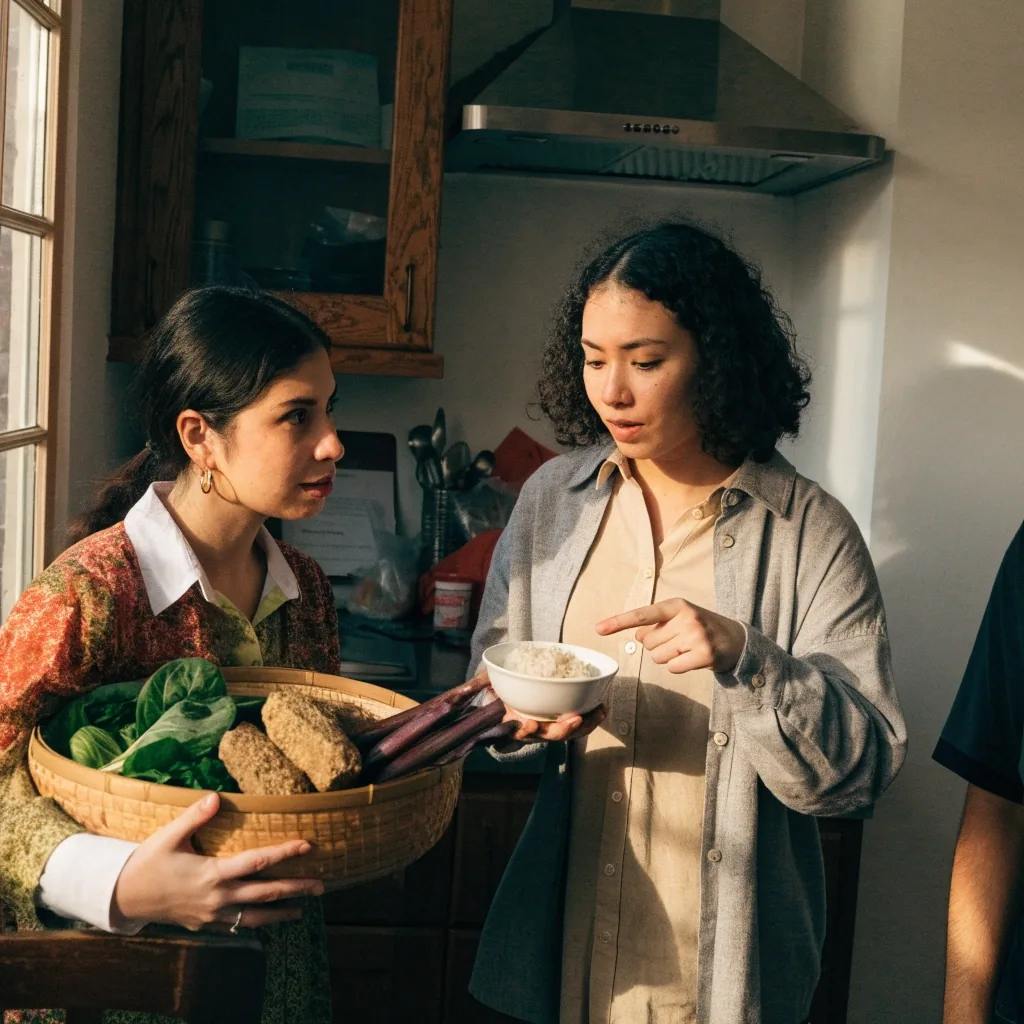
Advice only helps if you can follow it in your own kitchen — so that is where every session starts.
Who we are, and where we sit
Gizi Seimbang Konsultasi is an online nutrition consultation service based in Surabaya, at Jl. Basuki Rahmat No. 12. We work with families and individuals across Indonesia who want practical guidance on everyday eating, and we do it remotely so you don't have to travel to us.
Our approach comes from a simple position: advice only helps if you can follow it in your own kitchen. That shapes everything about how we run sessions — what we ask before the first call, what we look at together, and what you leave with.
Why we work online
Remote nutrition care has grown in Indonesia for good reasons. A 2026 qualitative study on telenutrition found that dietitians see it improving access to services, and that clients benefit from flexibility in time and location plus more tailored guidance.
The same study named real barriers: limited physical examination and internet connectivity. We describe those limits openly because you should know what you are getting. Online consultations suit nutrition conversations well, and when something needs an in-person check, we say so.
Reading the two sides of a remote session
What remote sessions do well
- Appointments fit around work, school runs and prayer times instead of a trip across town.
- We can look at the actual meals your household cooks, not a remembered version.
- Family members in different cities can join the same conversation about one parent's eating.
- Follow-up is easier — a short second call beats a second commute.
Where the limits sit
- We cannot measure or examine you physically over a video call.
- A weak connection can shorten or reset a session, so we keep a phone fallback.
- Some questions need a doctor's examination, and we will point you there.
- You need a quiet corner and about an hour, which is not always available at home.
What we believe about food
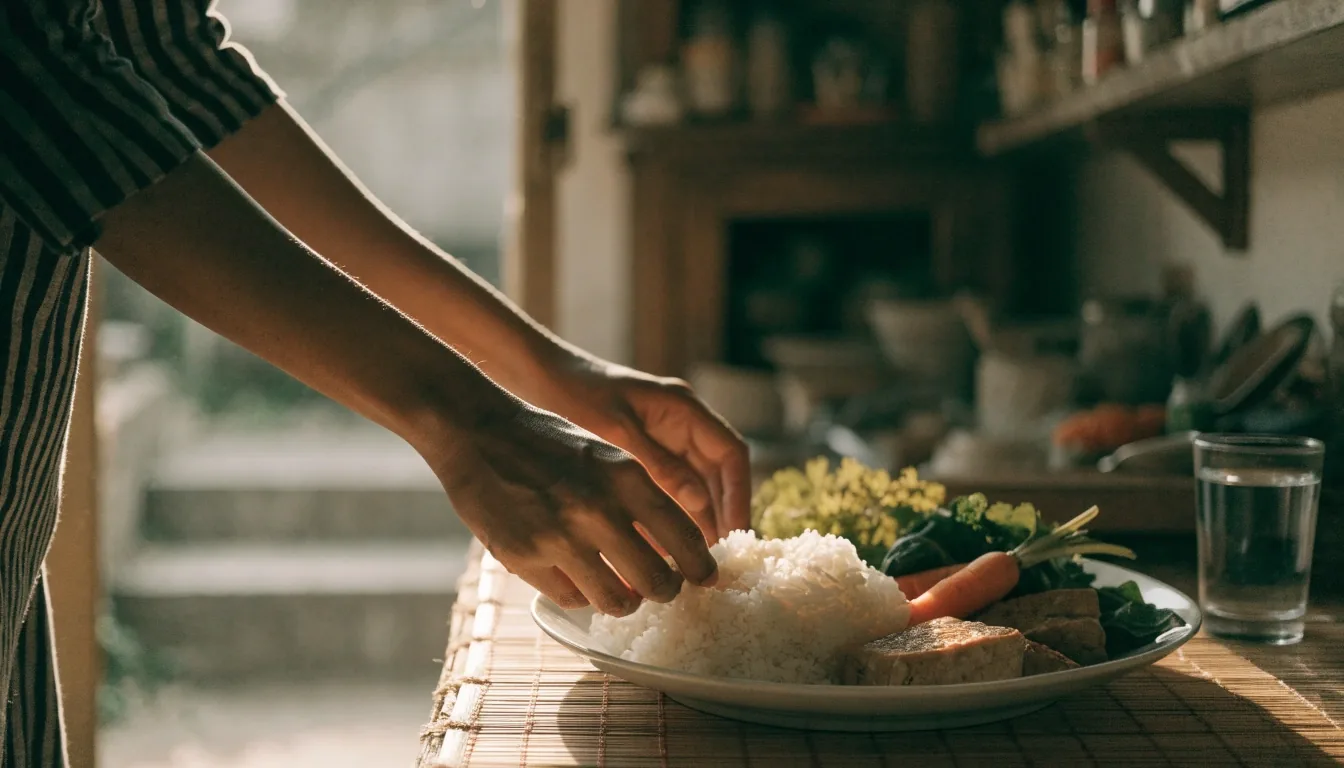
Indonesian eating is built around rice, vegetables, protein from tempeh and fish and eggs, and shared dishes cooked once for the whole household. Any guidance that ignores that reality is useless. We start from your menu harian as it exists, then adjust.
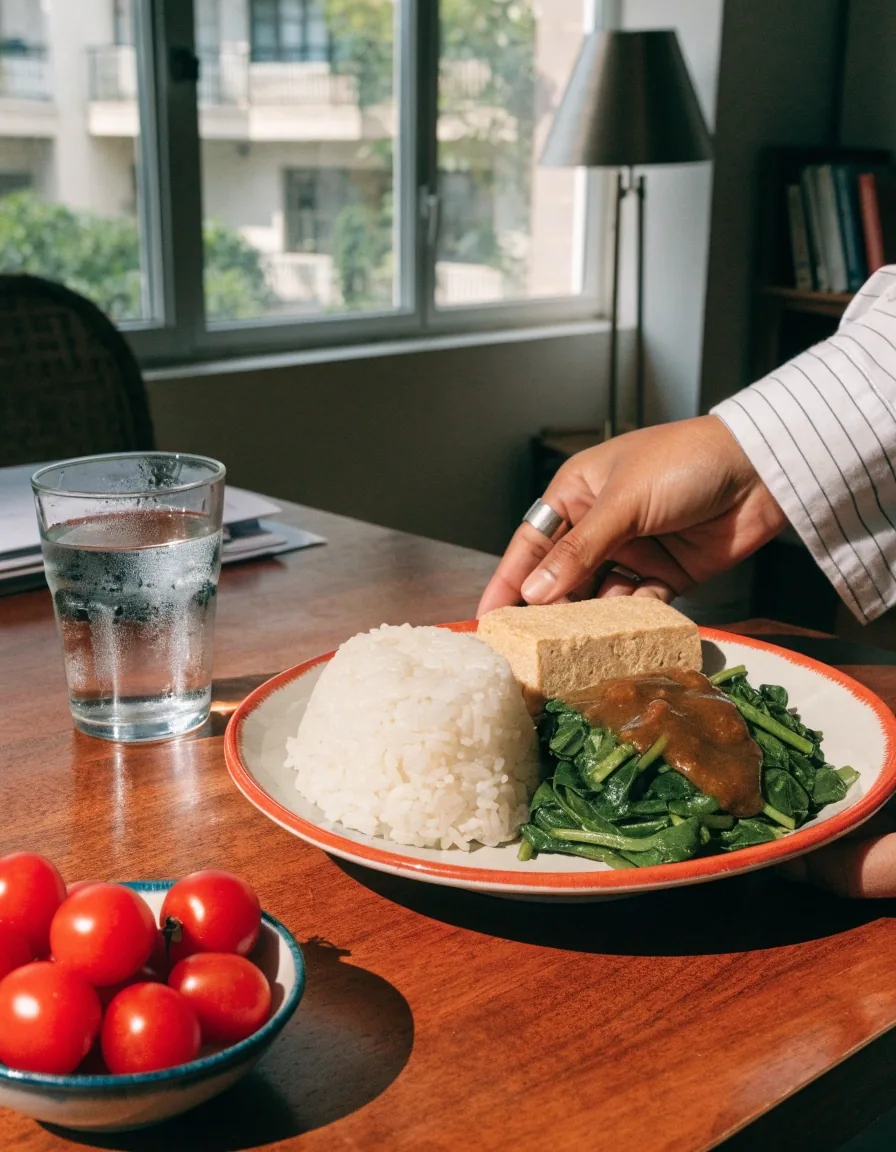
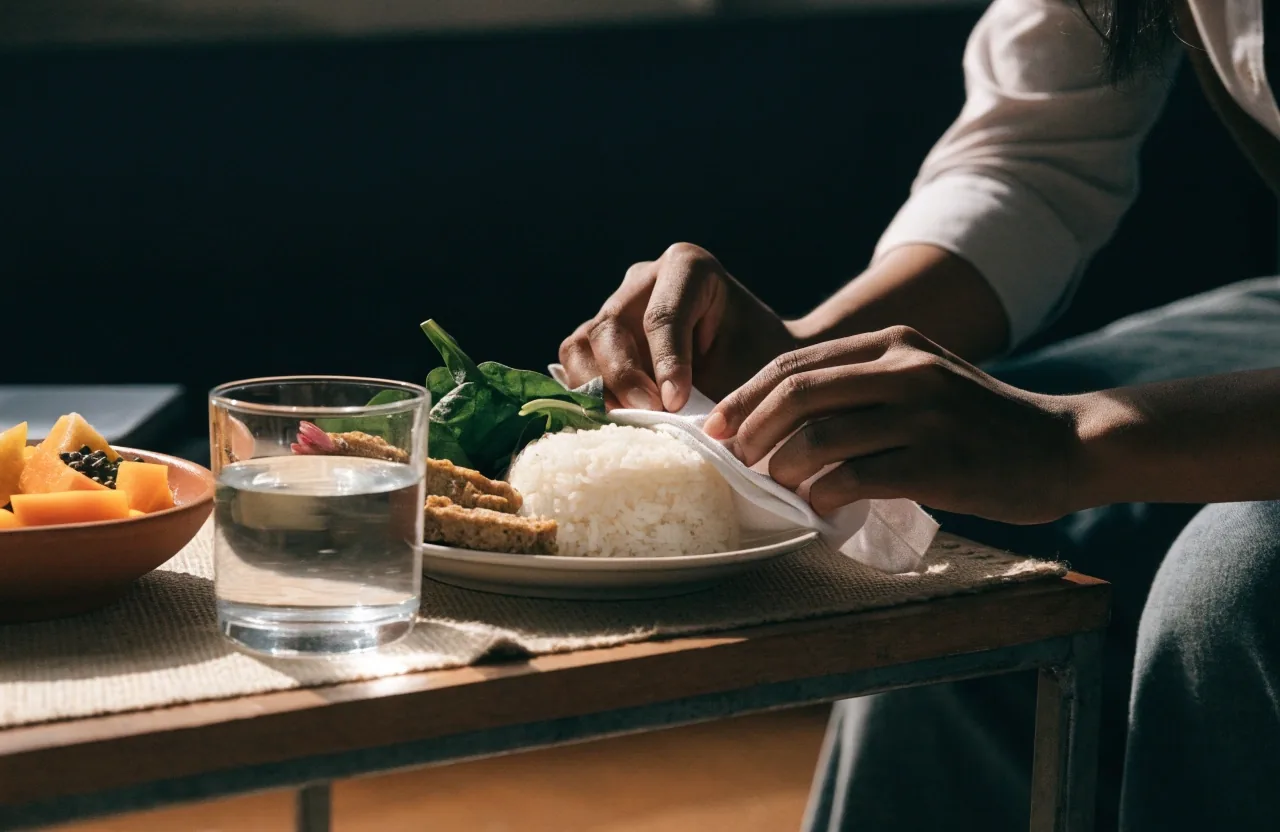
Isi Piringku gives us a shared visual language for portions: half fruits and vegetables, one quarter carbohydrate, one quarter protein. It is simple enough to remember without a chart, and specific enough to argue with — which is useful, because the argument is usually about how much rice is on the plate.
The plate, read section by section
AHalf the plate: vegetables and fruit, in whatever form your household already cooks them.
BOne quarter: rice or another carbohydrate, sized to the day you are actually having.
COne quarter: protein from tempeh, tofu, fish or eggs — the parts of a meal that keep you full.
DBeside it: water as the default drink, and fruit placed where it gets eaten.
A diet that only works for two weeks is not worth starting.
How we think about balance
Balance is not a strict formula. FAO Indonesia's food-based dietary guidelines cover variety, plenty of vegetables and fruits, limiting sweet and salty and fatty foods, breakfast, safe water, label reading, and handwashing. We treat that as a framework and translate it into what you eat on a normal day.
Some weeks that means more vegetables. Other weeks it means eating at consistent times. What matters is a pola makan you can keep — one that survives a busy month, a family gathering, and the week you do not feel like cooking.
Variety first
Rather than cutting foods out, we widen what a week contains. Different vegetables, different proteins, a fruit that actually gets eaten. Most households find this easier than a list of bans, and it holds up when the market has run out of something.
The parts that add up
Sweet, salty and fatty foods are part of Indonesian eating. The useful question is how often and how much, not whether they exist. We look at where they sit in your week, and what surrounds them on the same day.
Water and timing
Water as the default drink and a consistent breakfast are two habits that change the rest of the day quietly. We set them alongside the food changes instead of treating them as separate rules to remember.
Who we work with
You do not need a diagnosis to book a session. Most people come with a question about a normal week, not a medical event.
- Families cooking one meal for several people
- Different needs at one table: a child who is fussy, a parent watching blood pressure, a grandmother who eats little. We work on the shared pot rather than cooking three dinners.
- Office workers who eat out most days
- Warteg, kantin, delivery apps — we make your asupan harian make sense inside that routine instead of asking you to cook lunch at your desk.
- Parents with pregnancy or breastfeeding questions
- These are among the most requested topics in Indonesian online consultation profiles. We cover what to eat, what to keep an eye on, and which questions belong with your obstetrician.
- Adult children helping an older parent
- Often the person booking is not the person eating. We plan meals that are easy to prepare for someone else, and simple enough that whoever cooks can repeat them.
- Beginners who want to understand portions
- If you have never talked to a dietisien before, start here. One session is enough to see whether the approach fits how you want to eat.
What we don't do
- We don't prescribe medication or replace your doctor. Nutrition support works alongside medical care.
- We don't promise a specific result. What changes, and how fast, depends on your week and your household.
- We won't hand you a rigid list of banned foods. Plans that work only while you are motivated rarely survive a normal month.
- If your situation needs a physician, we will tell you and help you frame the questions to ask.
The standards behind the service
Dietitians in Indonesia operate under minimum competency standards set by the Ministry of Health, which describe the profession as one expected to deliver competent, quality services. That is the baseline we hold ourselves to.
It also means we can tell you what a dietitian is trained to do and where the boundary with medical care sits. You can ask us about that in a session — it is a fair question, and the answer should be plain.
Local questions, local answers
Guidance has to fit where you shop and what you cook. Reading a label makanan at a Surabaya supermarket is different from checking a product online — the shelf, the price, and what else is in the trolley all matter.
A 2026 article comparing Indonesia's plate guidance with global recommendations found the guidelines converge on limiting free sugars and salt, and on water as the default drink, and it cited 400 grams of fruit and vegetables as a common benchmark. Our job is applying those shared points to your actual meals — the market you walk to, the rice you buy, the fish that is affordable that week.
Less free sugar and salt across the week.
Water as the drink you reach for by default.
Fruit and vegetables at most meals, not one heroic serving.
Breakfast, label reading and handwashing kept in view.
How we handle your information
When you register, we collect what we need to prepare for your consultation: your name, contact details, goals, and any context you choose to share. We use it to arrange and run the session.
Details are covered in our privacy policy, and you can ask us to explain anything that isn't clear — before you register or during a session. Nothing about your eating needs to be shared with us that you would rather keep to yourself.
Getting started with us
Registration is a short form and it doesn't commit you to anything. Fill in your details, describe what you want help with, and submit. A dietitian reviews it and follows up to schedule a session.
Four steps, in order
- A Fill in the registration form with your name, contact details and what you want help with.
- B A dietitian reads it and replies to arrange a time that fits your week.
- C We talk through what a normal day looks like for your household, and where you would like it to change.
- D You leave with a workable plan for your pola makan and a clear idea of when to check back in.
If you have a question before registering, the contact page has our phone number, email and address: Contact the team — Jl. Basuki Rahmat No. 12, Surabaya, Jawa Timur 60271, +62 31 531 9876, weekdays 09:00–18:00.